
It’s a cold winter morning. Temperatures plunge below freezing and the ground is blanketed with layers of snow and ice.
You look out the window and realize the scene could be a textbook definition of “picturesque” … except for one tiny issue. You must go out into it.
While you’d rather stay in bed, the planning ahead has given you a degree of comfort. When the weather forecaster warned of a high probability of inclement weather overnight, you salted your porch and driveway, moved the snow shovel out of the shed, and left the faucets dripping.
Dressed in layers, you top off your bulky ensemble with a heavy coat and gloves. Then you stretch a set of pullover metal grips onto the soles of your shoes because it is icy out there.
The point is, you are prepared for this moment.
In much the same way, Liberty also “bundles up” for the winter season, albeit much earlier.
A winter plan for every generation plant
“Our power plants start in the fall, going through every heat trace circuit to check them and make sure they’re going to work,” says Brian Berkstresser, Liberty Senior Director, Generator Operations. “Some of the plants have hundreds of circuits that must be checked every year.”
“We also put up temporary screens to act as windbreaks. The cold wind can cool things off quickly. We take the screens down after winter is over to keep things from getting too hot in the summer.”
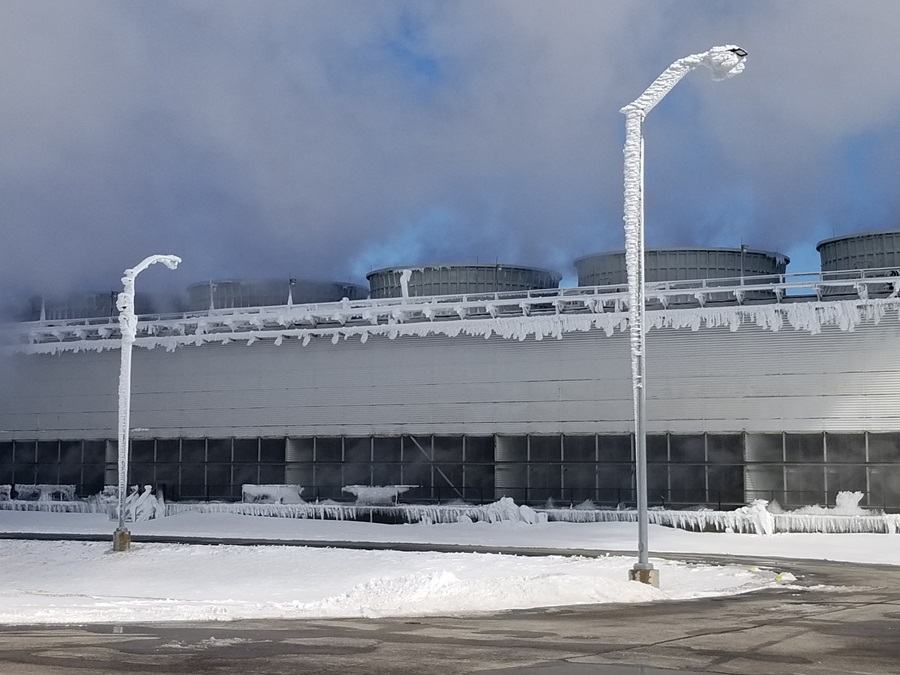
One of the biggest parts of the annual winter prep work is checking the heat trace, which is resistant heating under the piping insulation that keeps the piping lines warm and operating efficiently.
Much of the work is the kind of common-sense preparation you’d expect:
- Extra heaters on standby, along with enough fuel to power them.
- Ice melt at the ready.
- Snow-plow blades for the pickups.
- Making sure plant doors are shutting properly.
- Ensuring heaters installed in critical plant areas are functioning properly.
“The most important part of winter preparedness is talking to the teams about watching the weather and making sure they are prepared,” says Berkstresser. “Each plant has its own plan and procedures. We train everyone at each plant about their specific cold weather plan so that plant personnel are properly prepared for the winter weather season.”
Common-sense standards and cold-weather capabilities
Federal regulations are in place to create a checklist of steps that generation plants must take to prevent outages that affect customers during extreme weather.
The North American Electric Reliability Corporation (NERC) monitors utility compliance with these regulations. The regulatory authority acts as a watchdog for grid reliability, through six regional entities. In the Midwest, that entity is the Midwest Reliability Organization (MRO).
“There are approximately 1,000 regulations we have to comply with under NERC,” says Fred Meyer, Liberty’s Senior Director of NERC Compliance. “Over the last 20 years, the number of standards and requirements have increased along with issues such as cyber security and major weather events.”
The most recent regulations stem from 2021’s Winter Storm Uri, which impacted more than 170 million people across the United States including Liberty and other midwest utilities – but nowhere as much as Texas, which saw the coldest winter weather the state had experienced in more than three decades.
Plummeting temperatures froze generators, triggered power outages that affected more than 10 million people, and contributed to more than 200 deaths.
“NERC now performs an audit every three years on these reliability standards, including preparing for cold weather,” Meyer says.
New requirements following Storm Uri include:
- Using historical data from the past 20 years to calculate the most extreme cold temperatures
- Determining what the coldest temperature is that each generation plant can operate at
- Identifying additional components at power plants – other than the generators themselves – that could be impacted by freezing temperatures and disrupt normal operations
“It’s become a very formal process, but a lot of it is common sense,” says Meyer. “These standards make generation owners understand their cold weather capability, and if they can produce the power needed.”
MRO is currently reaching out to select electric utilities and generation types to educate them about the latest standards.
Liberty recently hosted the organization for a session at our Energy Center power plant in La Russell, Missouri.
“They toured the plant and saw our cold weather preparations and walked away with a great impression … that we are well prepared,” he says. “They were impressed that we had full participation from a wide variety of employees, including our plant directors and compliance team.”
MRO officials said Liberty’s winter preparedness program has across the board support from the corporate level down to operations and maintenance.
“They demonstrated that the impact and potential impact of extreme cold weather events is taken seriously, and it is a priority to be available and able to produce power during winter weather,” they wrote in a follow-up to their visit.
“They took a lot of feedback from us as well,” Meyer says. “It’s a collaborative relationship and benefits everybody. I’m super proud of the work our plant teams do to get us ready for extreme weather.”