When the idea of supporting a local fish habitat was first proposed, Liberty went all in – hook, line, and sinker.
For several years, Liberty has donated expired gas piping to the agriculture program at Southeastern Community College’s satellite campus in West Burlington, Iowa.
“My son was a student at the college and doing an internship at the state park,” says Cesar Rubio, Liberty Senior Service Technician. “During a conversation, he asked about the possibility of accessing expired pipe to support the fish habitat.”
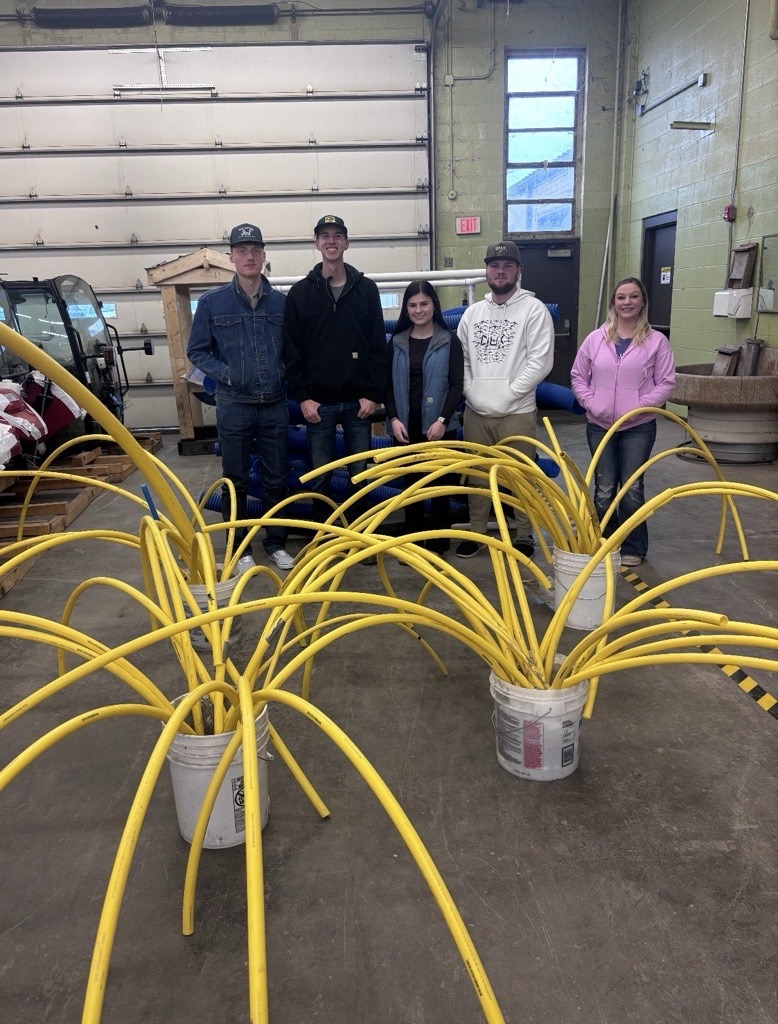
The polyethylene piping, which would otherwise be disposed of, became the basis for structures within Lake Geode – with sections of the pipe placed in five-gallon buckets and filled with concrete.
The 174-acre lake – the focal point for Geode State Park – was drained in 2017 as part of a multi-year restoration project to address water quality issues and high pH levels.
The project included stabilizing the shorelines, removing sediment, and enhancing fish habitats. The lake began refilling in 2021.
“When we first installed them, the lake was still empty, and the students helped place them in the lakebed,” says Sabrina Pidgeon, Professor of Agriculture Management at SCC. “Later, when the lake was refilled, we were able to just drop the structures into the water from a boat.”
“I love the concept of taking things that would otherwise be scrap material and using it for a purpose.”
In this case, more than one purpose.
“The first is to provide a structural habitat,” she says. “Fish feel safer when they have something to swim in and around. But they also help start the food web. They become covered with phytoplankton algae, then small zooplankton consume the algae.”
These micro-invertebrates then become nutrient-rich food for fish in the lake.
In addition to Lake Geode, students have used the piping to create structures to be installed in other lakes and ponds.
Having partnered with the Department of Natural Resources for SCC’s agriculture program, Pidgeon says the pipe structures are a better alternative than other options.
“I knew that our district fisheries didn’t want pallets that would fall apart, tires, or brush,” she says.
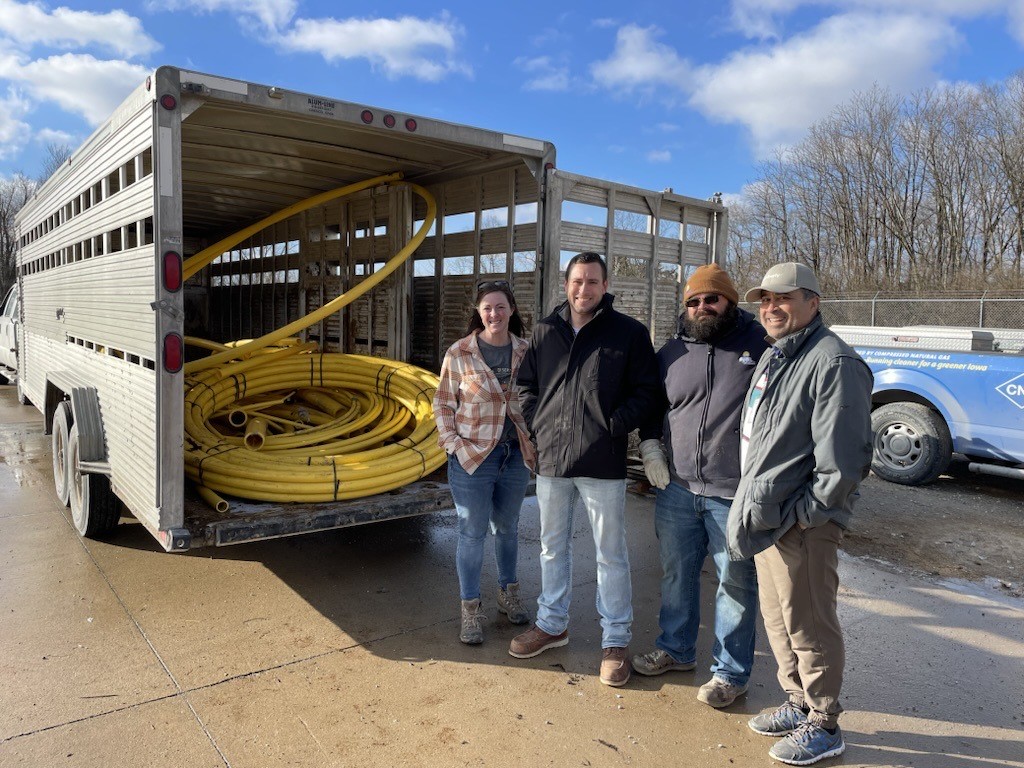
This year marks the third time Liberty has donated expired piping to the program, says Rubio.
“They came out three weeks ago, and we loaded up a trailer for them,” he says. “We’ve had conversations about continuing to support this effort in the future.
“To me, the most important dimension of this is that it’s a way for us to be involved in the community while having a positive environmental impact.”