
Well before that first perfectly formed snowflake drifts down from the sky and touches ground, Liberty’s line operations crew are readying themselves for winter weather.
“Weather is a big deal, and we prioritize making sure we are providing our employees with all the tools they need to operate safely and efficiently to keep our customers’ power on and restoration times to a minimum,” says Cody Bandy, Liberty Senior Area Manager-Line Operations, in Joplin, Missouri.
That includes making sure all equipment is prepped for the season, including wipers, winter fuel additives, and tire chains; and that everyone has boots, coats, stocking caps, gloves, ice cleats, and any other winter gear that may be needed.
“Operations also keeps a close eye on the weather to stay ahead of any issues that may arise so we can be proactive as possible in preventing outages,” Bandy says.
As a homeowner, there are also steps you can take to prepare for inclement winter weather and keep you and your loved ones safe.
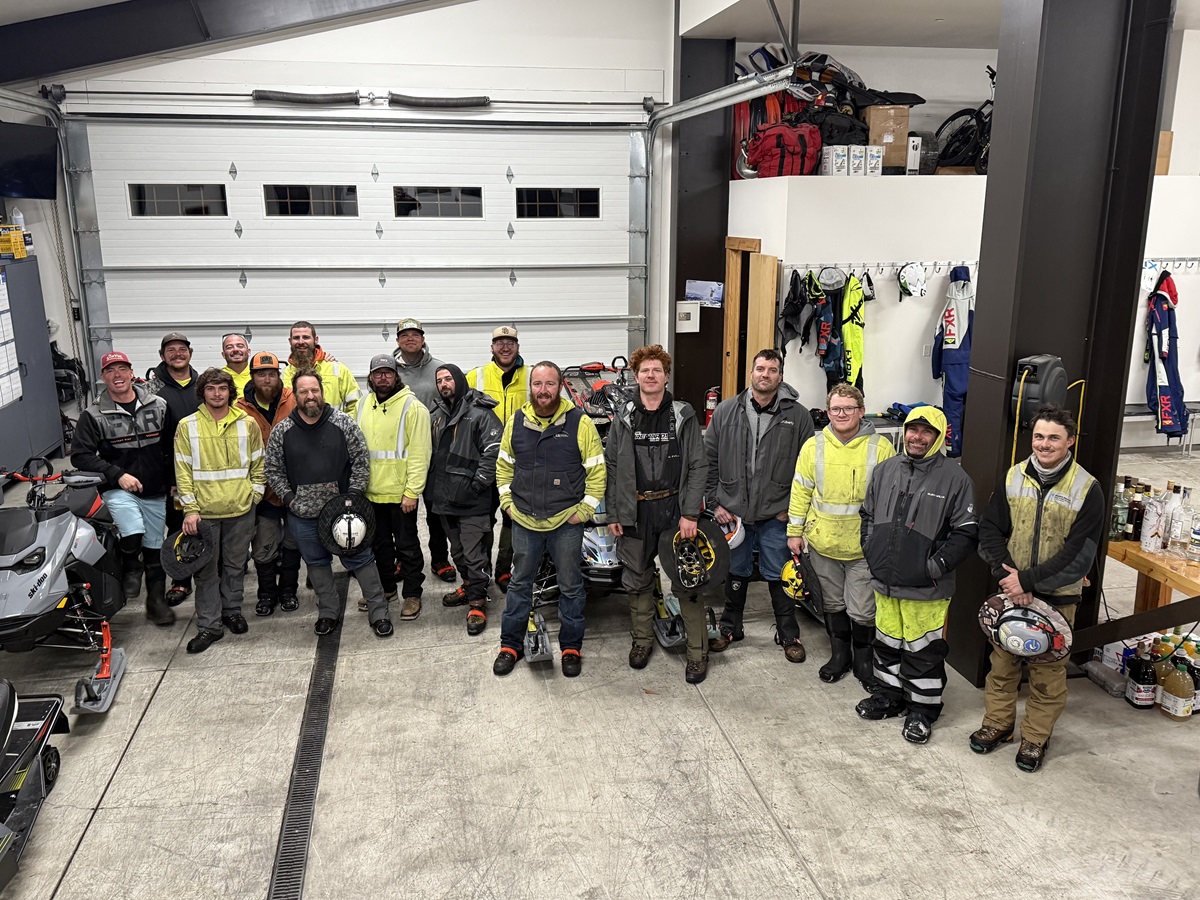
(Winter gear and snowmobiles at the ready, our Tahoe, California, electric crew was well prepared to respond to a recent storm.)
- Check your smoke and carbon monoxide alarms to ensure they’re working properly. Batteries should be changed every six months.
- If you have a generator, make sure it’s functioning in the event you need to use it.??
- If you don’t already have one, create an emergency preparedness kit – including first-aid supplies, essential medications, flashlight, and extra batteries.??
- No matter what the season, stay away from downed power lines. Even if it appears harmless, it could still be energized and extremely dangerous. Call 911 and Liberty at 1-800-206-2300 to report it immediately.
- In the event of an outage, gather your family in a central room where there is an alternative heat source such as a fireplace. (Never use a gas range for room heating.)
- If you’re using a kerosene or other fuel-burning heater, never leave it unattended. Be sure it is placed on a hard, non-combustible surface.
Like their colleagues on the electric side, Liberty's water team also prepares for winter by making sure they have all the supplies (from ice melt to pipe clamps) needed for snow removal, to repair main breaks, and to keep the heat on.
We’ve taken steps to prepare our water plants for winter. You can take some of these same steps at home, because “Water, water everywhere” is not something you want when the winter weather hits.
It’s important to take steps to protect your pipes from freezing before it’s too late. Frozen pipes can burst, causing damage, expensive repairs and lots of aggravation.
Richard Kern, P.E., Director of Operations for Liberty’s New York Water, advises taking a few simple steps to keep pipes safe from freezing temperatures.
“A little time spent preparing is better than the time (and money) it could take you once the pipes burst,” he says
“At my house, I replace batteries in my thermostats since a dead thermostat can’t keep the heat on. I also make sure that all windows, vents, crawl spaces and hatches are closed, so no cold air sneaks in. I drain outside hoses, turn off valves to outside water, and leave the spigots open.”
Kern adds that when temperatures dip below zero, the heat in your home should be set no lower than 60 degrees.
Additional tips include:
- Open cabinets in your kitchen and bathrooms to allow heated air to circulate around the water pipes.
- When temperatures fall below freezing, let indoor faucets drip slowly. A slow drip keeps water flowing and helps prevent it from freezing in the pipes.
- Know where your main water shut-off valve is located so it can be turned off in the event of an emergency.
- If you suspect a leak, turn the water off at the main shut-off valve. If you drain your pipes, you must turn off the power to your water heater if it is electric and/or the gas supply line to the water heater.
- If your pipes do freeze, contact a professional plumber who may be able to thaw the pipes with warm air.